
MATTHEW 26:31-37, Mark 14:33, Luke 22:8-36.
In a previous study we saw how the Lord chose Peter, together with James and John, to witness the astounding moments of his transfiguration when he shone with the power and glory of God.
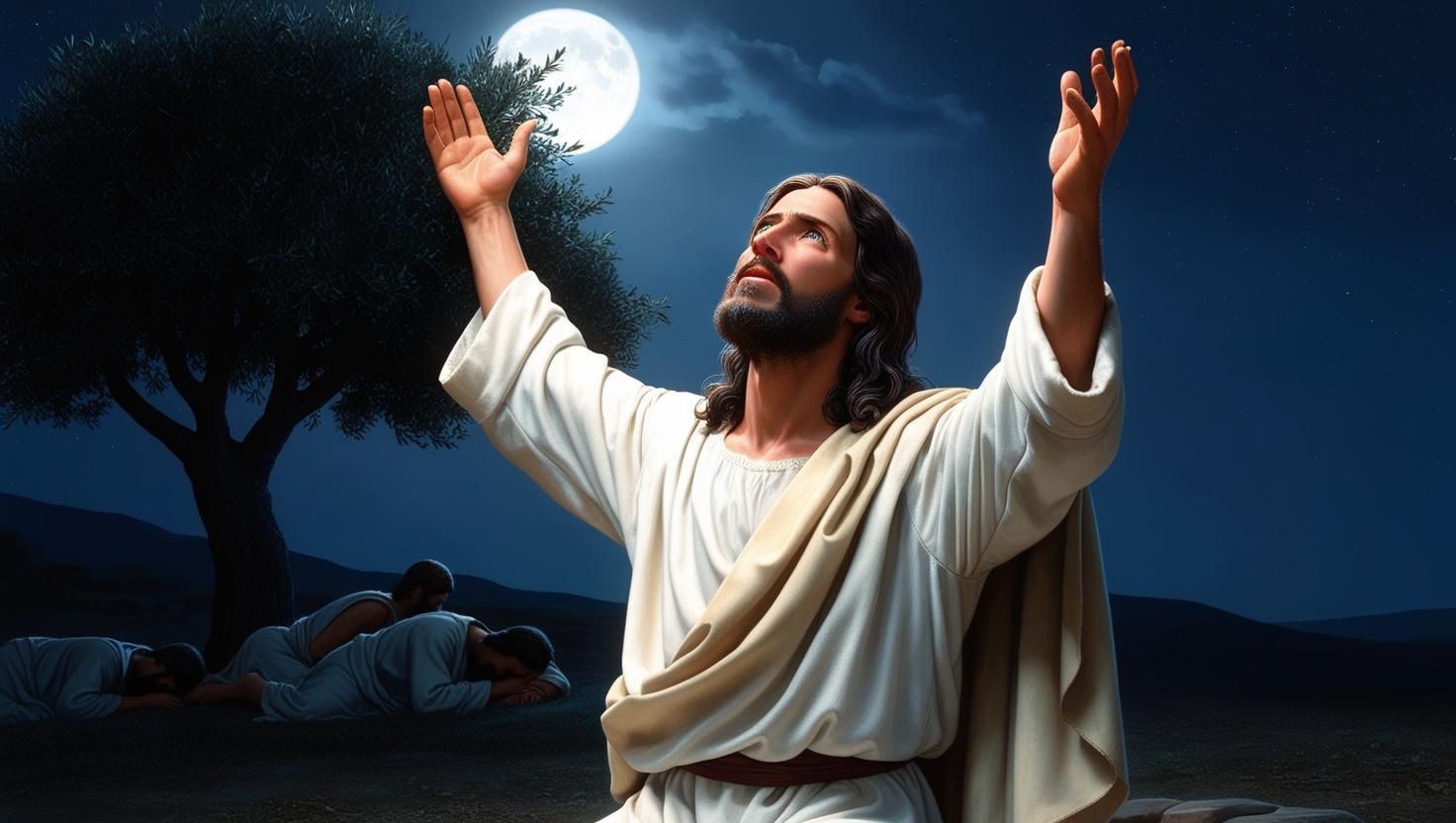
Now we will see how the Lord chose the same three disciples, Peter, James and John, to witness something very different – that of his terrible agony in the Garden of Gethsemane when he fell on the ground and was overwhelmed with grief and wept great drops like blood.
These two events could not have been more different; the one was full of power and glory, the other of brokenness and sorrow. It was here in the garden of Gethsemane that Jesus stood in the gap and interceded for the world, but those same disciples fell asleep.
Gethsemane is located in the Kidron Valley and means “Olive Press”, and it was in this garden that Jesus took the sorrows and burdens of the world and fell beneath the load of sin. He was pressed like olives, and out came all his love and grief for a lost world of sinners as he prayed with great sobs of agony. This valley is also called the Valley of Jehoshaphat and is known as the Valley of Decision, the Valley of Judgment. (Joel 3:2-14).
On the mount of Transfiguration, Jesus was empowered, changed, and shone with the glory of God. He stood at the gates of heaven. In the valley of decision, he was weak, broken, and wept in agony as he went to the crucifixion and then through the gates of Hades..
On the mount of Transfiguration, he had the two greatest men of God, Moses and Elijah, stand with him and the three disciples who fell asleep but who awoke in time to see his glory. In this valley, he was alone, overcome with sorrow and close to death, and the same three disciples again fell asleep but awoke in time to see his awful agony. What a contrast!
When we follow Jesus, we too will have different experiences, for he leads each of us in mysterious ways. Some of life’s events are triumphant and glorious, and some of them are painful and overwhelming, but they all change us. God allows this so that we might know him better and be conformed and moulded by his great power into his same image. If we are to be like him, it stands to reason we, too, will share similar experiences. (Philippians 3:7-15).
We shrink from adversity and pain, from suffering and hardship, and this is entirely understandable. However, notice that the disciples who followed him to the cross experienced these things for only one reason, and that was because Jesus had asked them to be with him. They were there for no other reason than Jesus wanted them to be with him. His presence with them made them meaningful. He needed them to be with him and to pray for him. It was the only time Jesus asked anyone to pray for him.
Without Jesus in our lives, our greatest achievements are of no lasting gain and our lowest depths of no eternal consequence. It is Jesus who gives life meaning. These were lessons the disciples had to learn and how better than to be with Jesus and go through them with him.
Jesus turned away from the portals of glory to descend to the darkness of Gethsemane, the cross and the grave, and he took his disciples with him so that they had a personal witness of it all. He could have told them to wait in Galilee, but he would have none of that, they had to come with him and see it and experience it for themselves. There are no shortcuts with God, and it was going to be very testing for them and Peter in particular.
Jesus foresaw all this and said before it happened, “Simon, Simon, behold, Satan has demanded to have you, that he might sift you like wheat, but I have prayed for you that your faith may not fail. And when you have turned again, strengthen your brothers” (Luke 22:31-32 ESV). Notice how Jesus used his original name, Simon, the “reed”. Peter could not see ahead and confidently asserted that he would go with Jesus to prison and even to death, but Jesus knew that he would fall and reassured him before it happened. In the end the “reed” would transform into a “rock”.
Beloved of God, if you are experiencing hardship, bereavement, loss, failure, loneliness, or despair – may I encourage you – you are not alone. God is with you and will bring you through. Peter saw and experienced both glory and suffering, and it made him into the beloved and faithful man he became. Many of God’s people have had the same experience.
In our next study we will consider the events that plunged Peter into depths of failure, despair, hopelessness and bitter remorse, and we will see how the Lord kept him and brought him through.
How can we get through dark times in our lives and care for others who are experiencing suffering?
In a few words, what can you learn and apply from this?



You must be logged in to post a comment.