
Matthew 22:36-40, 1 John 3:23.
It was not possible for them to keep it or fulfil the requirements of the law because they were unable to tackle them from the right direction. They had to be lifted “above the law” in order to keep it. They had to be changed from slaves to children.
The laws of Moses were actually derived from higher principles that affirm and govern them. For example, the law forbade the killing of anyone. The outworking of the real issue is to love our fellow man. If one truly loves others then one will do them no harm. This is the principle upon which the statement is based.
This is why Jesus always taught the principle and took it to extreme when he said one should love one’s enemies even to laying down one’s life for them. When Jesus was asked which was the greatest commandment, he did not quote from the Ten Commandments but from two lesser-known verses which emphasise the importance of love for both God and man. (Matthew 22:37-40, Mark 12:28-31, Deuteronomy 6:5 and Leviticus 19:18).
The Greatest Commandments: Love for God and Love for Others
They show that if one does not have a proper relationship with God, it is impossible to relate properly to others because both are linked. Jesus gave the two greatest commands, which are actually spiritual principles. Rules are derived from principles, and Jesus always taught the principles. The principle from which a rule or law arises is far more important than the law. If we live in the principles, the rules will follow automatically.
Through rebirth, Jesus changes the status of believers from slaves to children and elevates us into the realm of principles instead of law. He thereby lifts us out of the bondage of law into the freedom to cherish and enjoy the principles. Slaves are compelled to obey the laws of their master, whereas children choose out of love to keep the commands of their father. As children of God, we are delivered from bondage into liberty. (Galatians 3:21-29).
Christ taught two great principles from which all others stem. Jesus said that all that is written in the law and the prophets are summed up by just two commandments. The first is in a vertical plane – love for God. The second is in a horizontal plane – love for fellow humans. They form the principles of Christ’s Royal Law of love upon which every action will be weighed. (James 2:12).
Both these commandments are impossible to keep under duress, only by a free will choice on our part. This is the Royal Law of God’s Love. Instead of giving Ten Commandments Jesus gave two Principles to live by. (John 13:34, 15:9-12):
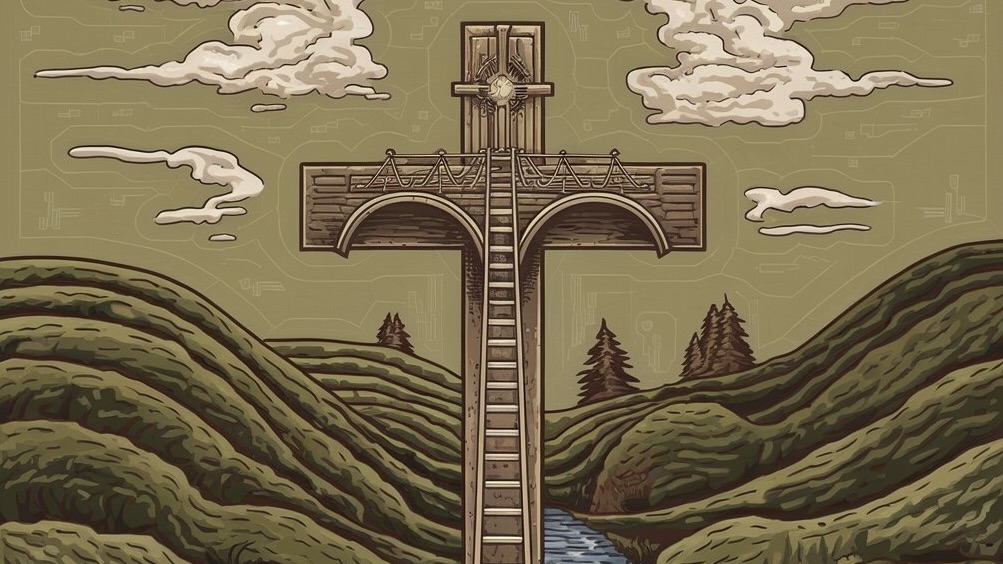
- To Love God – This arises from God’s love for us and our response to him. (1 John 4:10-21). God is the originator of love, for he loved us so much that he sent his Son to rescue us. (Romans 5:8). He initiated love to us, and we can respond to it. (John 3:16). Because God loved us first, we can love him in return. This is portrayed in the diagram by the vertical line of the cross. It is at the cross that God’s love came down from heaven to earth, and the way is now open for us to love him back. The cross allows a two-way love.
- To Love others – This also arises from God’s love and is portrayed by the horizontal line of the cross. Jesus was crucified with his arms wide open to welcome all who come to him. We can only show our love for God in practical terms by loving others: our neighbours and even our enemies. Our love for God reaches out on a horizontal level to those around us. In this way, the love of God fulfils the law of God. (Romans 13:10, Galatians 5:13-14).
God’s Love Fulfils the Law
Through God’s love, we are able to keep God’s law. The only way is to go via the right route: we first receive God’s love and then we are able to let that love overflow to others. This was demonstrated at the cross. Jesus first dealt in a vertical direction by interceding with the Father. He cried “Father forgive them” and thereby raised a ladder to heaven which opened the vertical route.
Thereafter he built a bridge on the horizontal level by answering the repentant sinner dying next to him and assuring him, “Today you will be with me in paradise”. This forms the cross.
The cross: A Ladder and a Bridge
Both principles are interrelated. Both depend upon the other. Take one away, and there is no cross. The cross forms a ladder to reach God and a bridge to reach our fellow man. Jesus said he was the ladder by which angels would ascend and descend from heaven to earth. (John 1:51, Genesis 28:12).
Christ lifts us above the crossbar into a place where instead of having the oppressive demands of the law bearing down upon us, we can enjoy the freedom of responding in faith to the forgiveness and liberty of God that flows freely from his grace and not his condemnation. (John 8:32-36).
Join me as we embark on a journey through “A Life of Faith.”
The Laws of God’s Kingdom:
Episode 5: The Beatitudes
Blog Series Five – Principles for Life in Christ




You must be logged in to post a comment.